Here is an image that captures the human dilemma. “May the Lord help us,” and She always does.
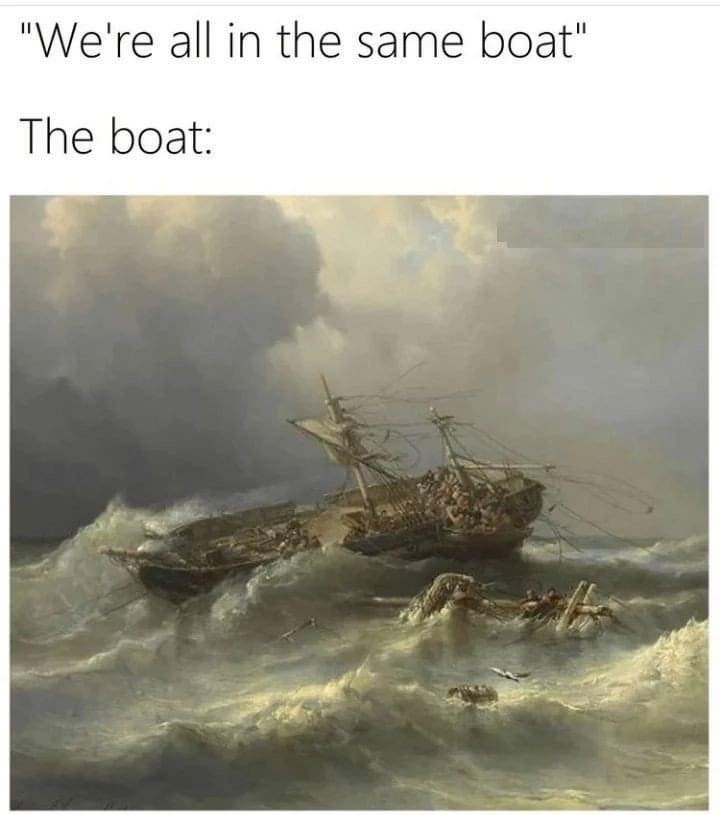

Here is an image that captures the human dilemma. “May the Lord help us,” and She always does.
PREFATORY NOTE: I have discovered that I have failed to respond to many comments over the past few years. This is not because I have so many responses! but because I am not completely on top of things, especially the intricacies of WordPress. I will try to do better!
I have a brother-in-law who has been a key figure in the development of my intellectual and spiritual life. He is better educated, more accomplished, and more successful in all respects than I have been…or will be. One gift several decades ago from his erudition was the Thomas Mann novel, “Joseph and His Brethren.” I stumbled across that tome moments ago when perusing my library and it fell opened to a page, a paragraph of which I will quote shortly. In this fictionalized story of Joseph from the Hebrew Old Testament Jacob has just learned of the apparent death of his beloved son, Joseph. Jacob was so overwhelmed that he proceeded to tear off, not only his upper garments in grief, but was in the process of what his friends and family realized would be a complete stripping of all his clothing. This was such a profound gesture that the people turned away. The following is one of the most powerful descriptions of shame I have ever discovered, reflecting the depth and power of this wonderful German novelist:
There is only one right and proper word for the feeling which was at the bottom of their action: shame. But one must understand it in its ultimate and often forgotten sense, as a monosyllabic description of the horror we feel when the primitive breaks through the layers of civilization, at the surface of which it is only active in a much softened and allegorical form. We must regard the tearing of the upper garments in heavy sorrow as being of such a nature; it is the civilized and domesticated form of the original custom of shedding every covering and adornment considered as the badge of human dignity now destroyed and ruined by the extremity of human woe. It is the abasement of man to mere creature So it was with Jacob. In the depth of his grief he went back to the original meaning, from the allegory to the crude thing itself and to the horrible reality. He did what “one does not do”—and that, rightly considered, is the source of all horror. For therein the undermost becomes the uppermost. If, for instance, it had occurred to him to give utterance to the abandonment of his misery by bleating like a ram,, his people could not have felt more nauseated than they did. (“Joseph and His Brethren,” Thomas Mann)
Another one of my “girlfriends” has shaken me out of my literary doldrum! One of them, Emily Dickinson, often does this but this morning a contemporary girlfriend, Julia Kristeva, has intervened. Kristeva is a Bulgarian-born linguist and psychoanalyst, educated in France and now practicing in Paris. Upon awakening, for some reason I plucked from my bedside bookshelf, “Black Sun: Depression and Melancholia” and opened it to a bookmark from earlier readings and found the following observation:
Once solitude has been named, we are less alone if words succeed in infiltrating the spasm of tears—provided they can find an addressee for an overflow of sorrow that had up to then shied away from words.
Or as George Eliot put it in the 19th century, “Speak words which give shape to our anguish…”
Oh, the power of language! I now realize that in my early youth when I discovered language I had found my home, a sacred domain which provided an haven from the morass of poverty and incest of my culture. And in my clinical training and practice I often witnessed the power of words being discovered by my clients…often with my facilitation…allowing them to “name the demons” that were haunting them. Leonardo Da Vinci realized this power of language in 15th century Italy, telling us:
O cities of the sea, I behold in you your citizens, women as well as men tightly bound with stout bonds around their arms and legs by folk who will not understand your language; and you will only be able to give vent to your griefs and sense of loss of liberty by making tearful complaints, and sighs, and lamentations one to another; for those who bind you will not understand your language nor will you understand them. Leonardo da Vinci, from “Of Children in Swaddling Clothes”.
Paul Tillich is one of the great “finds” of mine in the 20th century, shaping the course of my life henceforth. I think he is the most important theologian I’ve ever come across and one of the most important thinkers. Being raised in Nazi Germany, he could not help but have learned a lot about boundaries and the easier path for him would have been to succumb to the inertia of his culture and become a Nazi; absolutism and certainty always solves the “messiness” of what could eventually become a mature faith! But somewhere along the course of his young life, he found a “contrary” vein of thought in his heart which led him to follow the path of a German contemporary of his, Hannah Arendt and employ Shakespeare’s “pauser reason.” He found that boundaries had value but only if one could find the equally valuable respect for the “no boundary” dimension of life. This wisdom allowed him to write among many other things, “The Courage to Be” which is such a powerful book on the importance of “be-ing” a human and not simply become flotsam-and-jetsom in the current of contemporary thought. Here is an excerpt….
The American book, “On the Boundary” tells about several boundaries that are common to all and at the same time to my own personal destiny: about the boundaries between country and city, between feudalism and civil service, between bourgeoisie and bohemian, between church and society, between religion and culture, theology and philosophy — and lastly, quite personally, between two continents. (He had moved to the United States to escape the Nazis.)
The existence on the boundary, the boundary situation, is full of tension and movement. It is in reality not a stance, but a crossing and returning, a re-returning and a re-recrossing, a to-and-fro, the goal of which is to create a third area beyond the bordered ones, something on which one can stand for a time without being enclosed in a fixed border. The situation of the boundary is not yet what one could call peace; and yet it is the passage that each individual must and that peoples must go through to arrive at peace. For peace means standing in the overarching thing that is being sought in the crossing and the crossing back over the boundary. Only someone who has a share in both sides of a boundary line can serve what overarches it and thus serve peace, not someone who feels secure in the momentary quiet of a fixed border. Peace appears where in personal and political life an old boundary has lost its importance and with that its power to foment strife, even if it continues in place as the boundary for some partition. Peace is not a tensionless juxtaposition; it is unity in something more comprehensive, in which the opposition of living powers and the conflicts between old and new are not lacking, but in which they do not break out destructively, but rather are constrained in the peace of what overarches them.
If the crossing and crossing back over the boundary is the way to peace, then the fear of what lies on the other side, and the wish that is born from that to be rid of it, is the root of discord and war.
When fate has taken one to the boundary of one’s being and has made one aware of oneself, one is faced with the decision of falling back on what one is or of crossing beyond oneself. All persons are led to the boundary of their being now and then. They see the other beyond themselves, which appears as a possibility for themselves, and awakens in them the fear of the possible. They see their own boundedness in the mirror of the other, and are frightened. (W. H. Auden, “And Truth met him, and held out her hand; but he clung in panic to his tall belief and shrank away like an ill-treated child.”)
Tillich’s explanation of the subtlety of boundaries reveals how conflict arises among human beings, and technically the whole of creation. He is very astute, and very “Rumi” to recognize the value of an “overarching framework” as being the solution to what can otherwise be an interminal and even lethal conflict. Rumi, a 13th century Persian told us, “Beyond the notion of right doing and the wrong doing there is a field; I will meet you there.” The “field” is the “overarching” Presence that Tillich had in mind.
Shakespeare thought there was and added that, “rough hew it though we may” the result will be the same. In the following Wendell Berry poem, the energy of this “destiny” is described as an “hunger organized” by the simple sparrow. The wisdom of these two wordsmiths tells us that we are lived by energy that we can never fully understand but even in the “rough hewing” that we do, there is purpose. This encourages me as I embark on another day of “rough hewing”!!!
A sparrow is
his hunger organized.
Filled, he flies.
before he knows he’s going to.
And he dies by the
same movement, filled
with himself, he goes
By the eye-quick
reflex of his flesh,
out of sight,
leaving his perfect
absence without a thought.
Poet Dylan Thomas suggest rage had its place. Shakespeare, in King Lear said, “Blunt not the heart, enrage it.” Sometimes anger does have a place in unleashing the dormant passions of unlived life. The following poem is by Lynn Emanuel in the pages of a recent copy of the New York Review of Books:
hello to the unimaginative and dim ways of my kin, hello
to the bad lot we are, to the women mean and plucked, and to the men
on the broken steps who beat down the roses with their hosings,
to the nights that rose black as an inked plate, into which an acid bit stars—
puckered, tight, hard, pale as a surgeon’s scars,
hello to all that vast, unconditional bad luck, to the sensible, the stuffy,
the ugly couture of the thrifty, to the limp of bad goods, of old
furniture, the repeated wince of the creaky rocker, and to the grandmothers
dying in its clutch, and hello to rage which like an axis can move the world.
I chat via phone with a very gifted writer from New York City who lived here in Taos, New Mexico until about two years ago. This “confab” that we have bi-weekly is one of the most spiritually invigorating experiences I have in my life. She is writing an essay now on eidetic memory which brought to my tangentially-oriented mind the word “palimpsest.” And this, in turn, brought that same “tangentially-oriented” mind to the poet who introduced me to that term decades ago when I discovered the poet, Conrad Aiken.
A biographical note is in order. Aiken was born to a 1889 to a respected Savannah, Georgia physician and eye surgeon and his wife, the daughter of a prominent Massachusetts Unitarian minister. When he was eleven years of age, one morning he heard two gun shots ring out in his home and discovered that his father had shot his mother and then himself.. You can imagine the terror that gripped him. I share this anecdote because of a note that W.H. Auden made in a poem about William Butler Yeats, “Mad Ireland hurt you into poetry.” For that murder-suicide to have happened, you can only imagine the madness the reigned in Conrad’s household and certainly “hurt” Conrad into poetry also.
Here I wish to share a bit of an Aiken poem, followed by a link to the entire poem. It begins with how we “walk through many lives” and carry a bit of each of them with us as we constellate an identity. With the resulting synthesis we “see but the small bright circle of our consciousness, beyond which lies the dark this powerful poem, Aiken explores the intricacies of identity, the art of subterfuge inherent in daily life, the sadness, the narcissism, the disappointment, and the courage we find to carry on before the taunting of despair:
And, as it is with this, so too with all things.
The pages of our lives are blurred palimpsest:
New lines are wreathed on old lines half-erased,
And those on older still; and so forever.
The old shines through the new, and colors it.
What’s new? What’s old? All things have double meanings,—
All things return. I write a line with passion
(Or touch a woman’s hand, or plumb a doctrine)
Only to find the same thing, done before,—
Only to know the same thing comes to-morrow. . . .
If this poem speaks to you in the least, I encourage you to follow the link provided as it is a deeply moving poem from the heart of a poet full of very intense emotion with consummate skill is conveying his heart’s sentiments.
In the glory days of my beloved Arkansas Razorback Basketball team in the early ’90’s, the rabid fans in the home crowd would break out into this little ditty when “we” had vanquished another foe–“Oh, its hard to be humble, when you perfect in every way” In a memorable moment, the Texas A & M coach Shelby Metcalf was so angry, he walked to center court after the gloating tune and ground his shoes into an image of the Razorback mascot on the floor as he looked up into the crowd defiantly That was delightful gloating and I will never forget it. And, yes, I have a gloating dimension with Joe Biden having been inaugurated and Trump and his insurrection having been thwarted…so far! But my gloater is modulated this time, even more than it was back in 1989 in Fayetteville, Arkansas. Gloating is a human impulse, and I’m not groveling in contrition for feeling this impulse, but it is immediately modulated with the realization that, “This is no time for gloating.” This is no time for the childish ego-delight of having vanquished a foe in an athletic competition; this is a moment about our country’s welfare and even that of the world.
My study of history is brought to the table with this moment, In 1899, in the Spanish-American War the U.S.S. Texas had just sunk the Spanish cruiser, Viscaya. When the victorious “Texas” was cruising past the burning and sinking ship, its crew was loudly cheering when its Captain, John Woodward “Jack” Phillip, chided them, “Don’t cheer boys. Those poor devils are dying.” Though it is human nature to gloat here, there are so many “poor devils” who are dying and I’m not even speaking of the Republican Party upper echelon but of the rioters who so foolishly stormed the Capitol on “01/06/21.” Many of them are sorely regretting having given into their childish, old-brain impulses, having been stirred up by a sociopath president. And even Qanon members are regretting their actions, one of them, the Buffalo-horned “shaman,” crying out, “We were duped by Trump.” Others have reported feeling foolish. Gloating is not in order and even blaming should not be first priority. This is a “mess” we have been in for more than four years and gloating and blaming is short-sighted. It is so very Trump. We have an historic challenge before us and maturity, grace, and prayer is called for. I’m trying to “whup up” those qualities inside myself.
Last evening I stepped out into the bitter cold to witness Saturn and Jupiter come close to each other as if they were going to lovingly embrace, if you can consider “embracing” while separated by millions of miles. I can use the word embracing as in “touching” here only with the realization that in reality I am viewing this moment in our cosmic history from a physical distance of millions of miles. Even those two planets, appearing to be in “conjunction” are separated by five plus million miles. It is our “perspective” that allows us to witness this incredible moment in our history, giving us the necessary separateness that allows us to bring delight, joy, wonder and appreciation to the table. Before our perspective took roots in our early childhood we did not have the “luxury” of distance as we were part and parcel of a “moment” that we were immersed in and not able to cognitively/spiritually understand it. At that moment there was no “object separateness”…. to employ a bit of clinical jargon. It is the Biblical “fall” that gave us this detachment without which there would be no human culture. Spiritual maturity can gradually come to us in our “four-score and ten” when we grasp the wisdom of this Great Round of which we are but a part, a visitation of “Grace.”
The abysmal distance left us with a hunger to “close it up,” to find the lost connection and return to the delightful “Garden of Eden.” We pine for the relief from the burden of life in which we are separate and distinct, where culture seduces us into believing its artifice can give us that “Grand Conjunction” where grace awaits us. Culture, certainly language, can guide us in that direction but only if we see…and feel…that words will never suffice; they are but “pointers” to the Ultimate. The Buddhists so profoundly teach us, “The finger pointing to the moon is not the moon.”
Here I want to share another Edgar Simmons poem which beautifully and profoundly captures the experience of distance:
THE MAGNETIC FIELD
Distance…which by definition
Indicates a separation from self
Is the healing poultice of metaphor,
Is the night-lighting of poetry.
As we allot to elements their weights
So to metaphor we need assign the
Weight of the ghost of distance.
Stars are stars to us
Because of distance: it is in the
Nothingness which clings us them
That we glory, tremble, and bow.
O what weight and glory lie abalance
In the stretch of vacant fields:
Metaphor: the hymn and hum of separation.
I am increasingly fascinated with the realization that I am just a blob of protoplasm, frantically scurrying about on this chunk of cosmic granite with a bunch of other blobs. In some sense I am part of an ant hill, a simple ant drone going about my daily life thinking that I am separate and distinct from all the other ants, oblivious to the fact that I’m not in the least. To use another metaphor I, too, am just a single letter in an alphabet…quite often upside down…gradually finding the humility to accept my meager status in this cosmic adventure.
I began this sojourn very simply, just a simple gleam in my daddy’s eye which shortly thereafter took root in my dear momma’s body and soul. There the magic of life came into play, designing me to go far beyond the pulsating quiver of energy I might have been without this “grand design.” Thanks to Her wisdom, I “chose” to unfold meaningfully, and contriving arms and legs, a head, a torso and…oh my Lord…genitalia! And, pretty close to an “essence” of this, I found myself with a tiny “will” that is today, nearly seven decades later, still whirly-gigging my way through something I eventually learned to call “life.” I just looked up the term “whirly-gig,” btw, and found the urban dictionary describing it as “an unspecified object that has some sort of rotational point.” That’s me!!!
I wish I could have discovered this ignominy earlier in life, allowing me to just “whirly-gig” to my hearts to delight rather than being a slave to this “rotational point” that I was. Hey, I might have occasionally just kicked my heels and screamed with delight, seeing this world as “puppies and flowers all over the place.”It is delightful to look around me this morning, watching the news, chatting with my wife and canine son, Petey and watching this bitter-cold New Mexican Saturday unfold under a marvelous sunny sky. My wife and Petey too are but “blobs”; but then the whole world is composed of these pulsating sacks of energy, these “meat suits” that we usually take to be who we are. Wouldn’t it be nice if humankind could find this humility and embrace the notion that we are all in this “thing” together and could get along if we wanted to?
AFTER THOUGHT—The alphabet point was an illusion to Kierkegaard who also felt he was an outside—“I feel like a letter turned upside down in an alphabet.”
 literary lew